Laser beams are aligned at the stationary layer in the cell
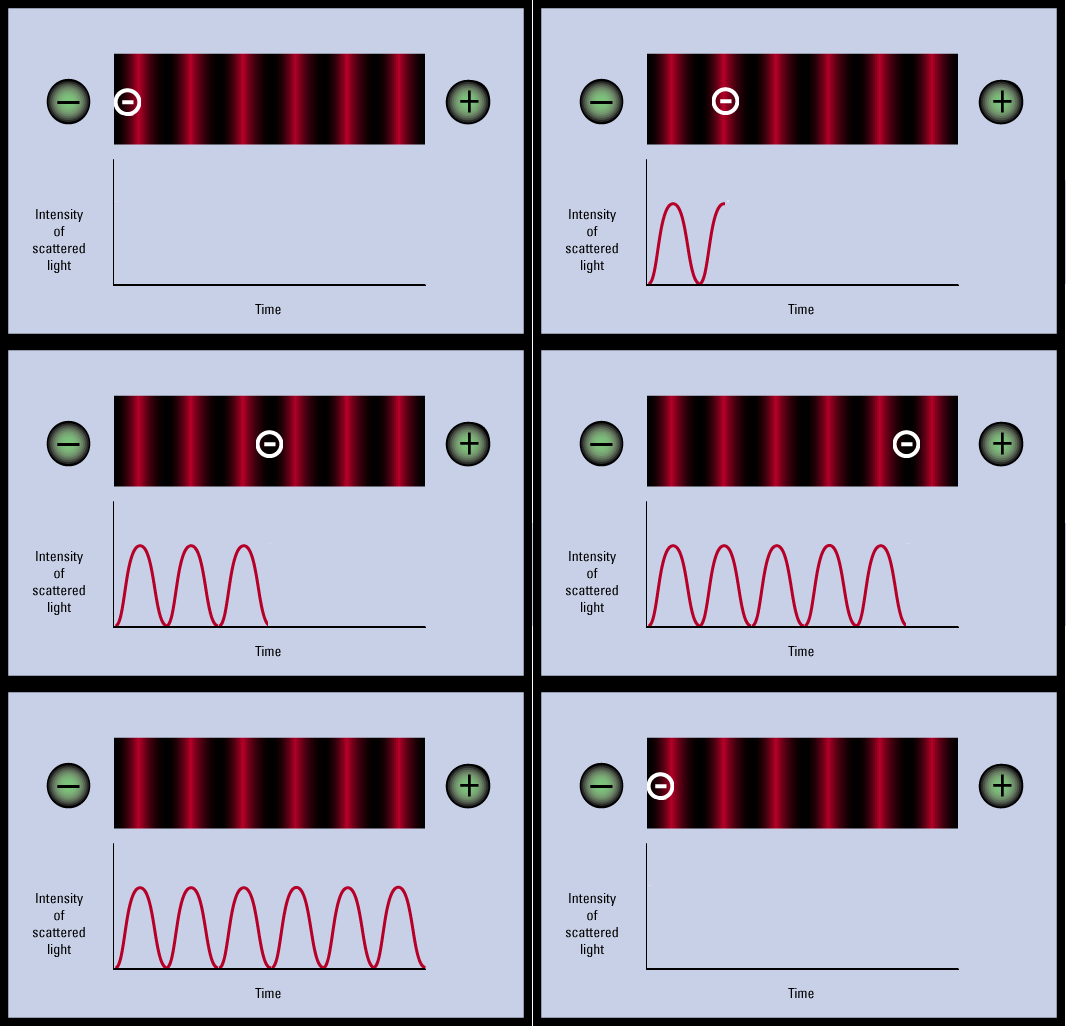
At the crossing point of the beams, Young’s interference fringes of known spacing are formed
Particles moving through the fringes under the influence of the applied electric field scatter light whose intensity fluctuates with a frequency that is related to the particles velocity
Photons detected are input to a digital correlator
A frequency spectrum is produced from which the mobility and hence zeta potential are calculated
Laser Doppler Velocimetry
What about particles with no charge?
Particles with no charge will not move in an applied electric field
They will not be able to be detected
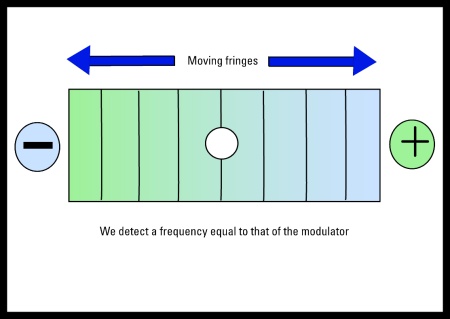
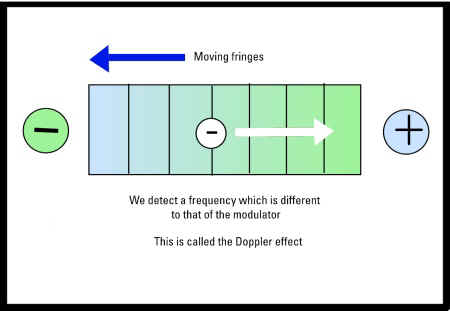
This problem is overcome by making the interference fringes move
This is done by using a device called a modulator
What happens if the fringes move but the particles do not?
What happens if the fringes and the particles are moving?